
Maha Shivaratri
Maha Shivaratri, meaning “The Great Night of Lord Shiva,” is one of the most auspicious Hindu festivals, celebrated with deep...
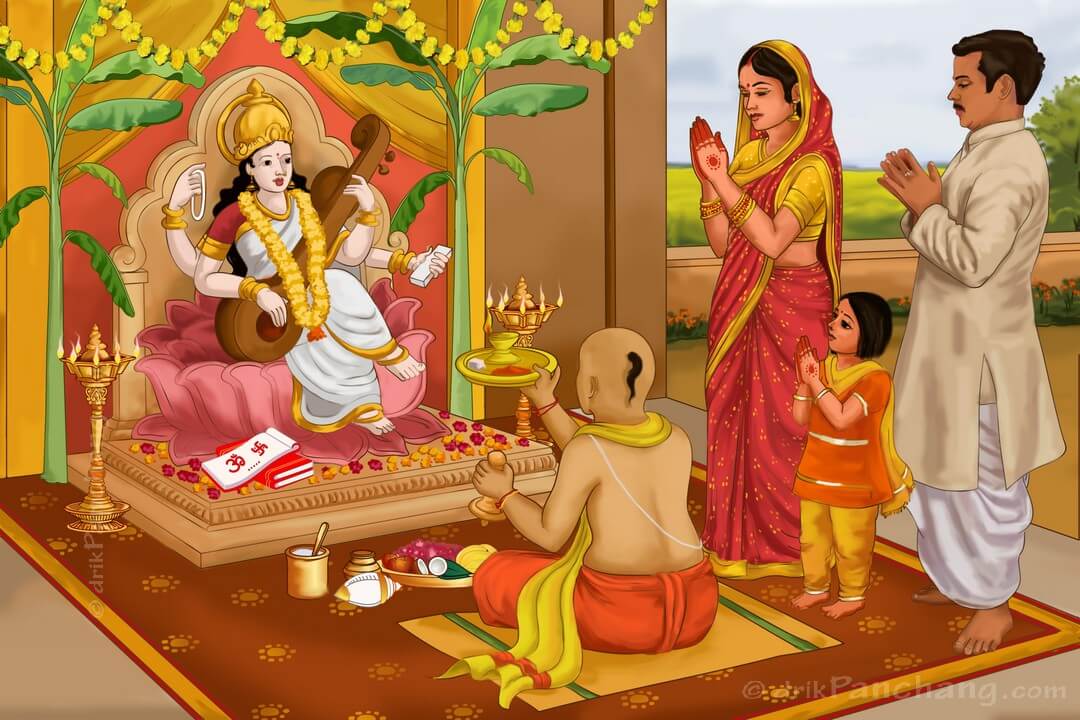
Vasant Panchami is a vibrant Hindu festival that marks the preparation for the arrival of spring (Vasant Ritu). Celebrated on the fifth day (Panchami) of the Hindu month of Magha, this day is entirely dedicated to Maa Saraswati, the goddess of knowledge, language, music, and all arts. It is a day when the earth adorns itself in yellow, symbolizing energy, prosperity, and the ripening of mustard fields.
The festival holds deep roots in mythology and nature, making it a day of renewal and wisdom.
According to Hindu mythology, Lord Brahma created the universe but found it too quiet and devoid of life. He sprinkled water from his Kalash, and a beautiful goddess with four hands appeared, playing a Veena. She was Maa Saraswati. As she played, the world was gifted with speech, sound, and music. Thus, Vasant Panchami is celebrated as her birthday.
The word “Vasant” means Spring. This festival signals the end of the harsh winter. It is a time when the weather becomes pleasant, flowers bloom (especially the yellow mustard or Sarson), and the agricultural cycle begins a new phase of growth.
In another legend, Vasant Panchami is the day when Kamadeva (the God of Love) was tasked by the gods to awaken Lord Shiva from his deep meditation to ensure the birth of Kartikeya. This symbolizes the awakening of the world from the “slumber” of winter.
If you are performing the pooja at home, here is your checklist:
Idol/Picture: Maa Saraswati.
Flowers: Yellow flowers (especially Mustard or Marigold) and White Lotus.
Cloth: A yellow or white cloth for the altar.
Offerings: Fruits (Ber/Jujube), Betel leaves, and sweets like Boondi or Malpua.
Stationery: Books, pens, inkpots, or musical instruments.
Other: Ghee lamp, incense sticks, sandalwood paste, and Ganga Jal.
Maha Shivaratri, meaning “The Great Night of Lord Shiva,” is one of the most auspicious Hindu festivals, celebrated with deep...
Holi, one of the most vibrant and widely celebrated Hindu festivals, marks the arrival of spring and the victory of...
Gudi Padwa marks the beginning of the Hindu New Year (Samvatsar) and the arrival of spring. It is the day...