
The Science of Sound: How Mantra Chanting Rewires Your Brain for Calm & Focus
In a world filled with constant notifications, deadlines, and mental overload, finding true calm and sustained focus has become increasingly difficult. While modern science offers mindfulness apps and cognitive techniques, an ancient practice from Vedic tradition is gaining renewed attention for its proven neurological benefits—mantra chanting.
Far from being just a spiritual ritual, mantra chanting is now backed by neuroscience, psychology, and sound therapy research. This ancient practice has been shown to rewire the brain, reduce stress, enhance concentration, and promote emotional balance.
Let’s explore how sound, vibration, and repetition work together to create profound changes in the brain and nervous system.
What Is a Mantra? More Than Just Words
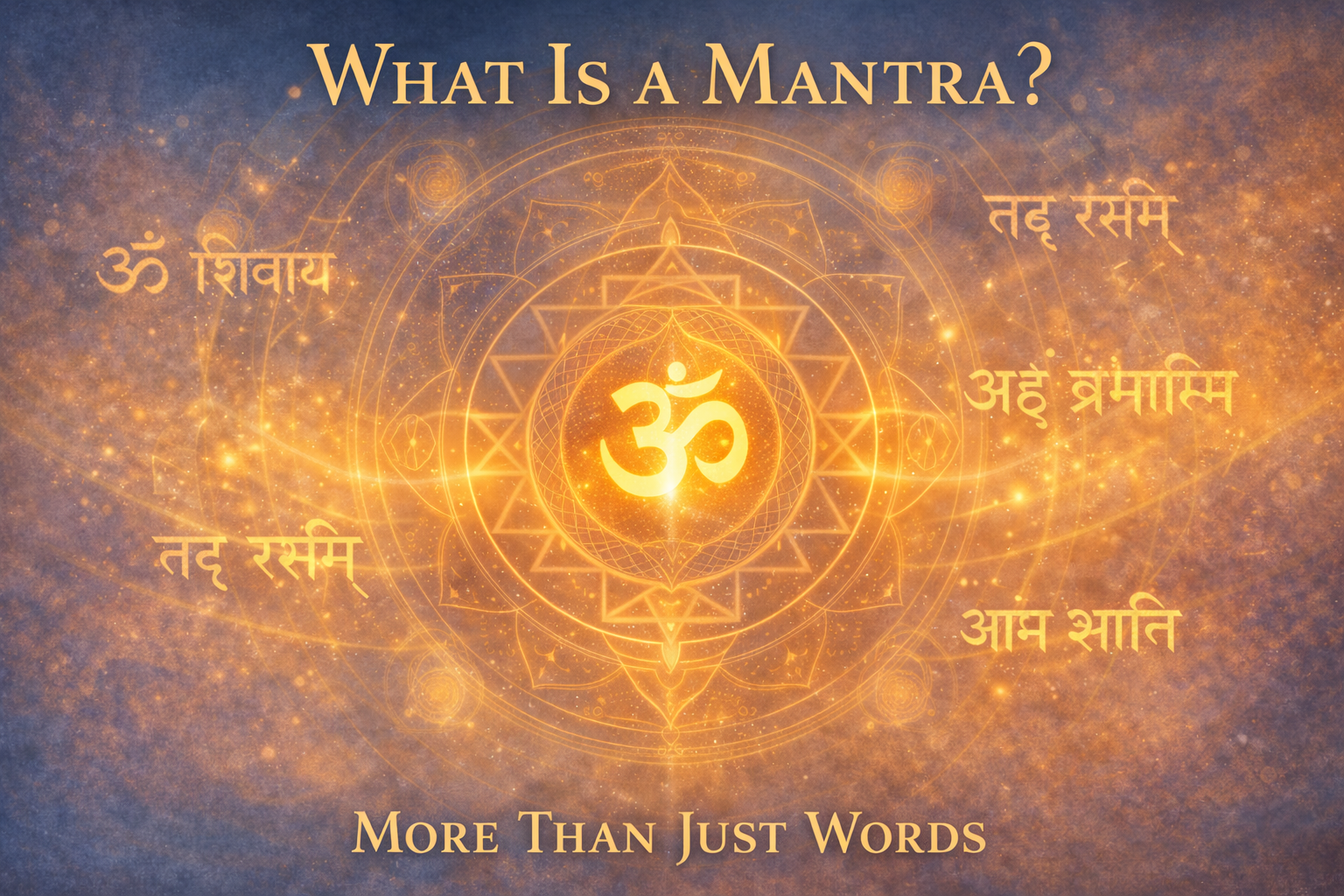
A mantra is a sacred sound, syllable, word, or phrase repeated rhythmically. In Sanskrit, the word mantra comes from:
- “Man” – mind
- “Tra” – tool or instrument
So, a mantra is literally a tool to train and protect the mind.
Examples include:
- Om
- Gayatri Mantra
- Mahamrityunjaya Mantra
Each mantra carries a specific vibrational frequency, which interacts directly with the body and brain.
The Science of Sound and Vibration
Everything in the universe—including the human body—is made of vibration. Modern physics and neuroscience agree that sound frequencies can influence brain activity.
When you chant a mantra:
- Sound waves travel through the vocal cords
- Vibrations stimulate the vagus nerve
- Resonance occurs in the chest, throat, and skull
- The brain synchronizes with rhythmic repetition
This creates measurable physiological and neurological effects.
How Mantra Chanting Affects the Brain
1. Activates the Relaxation Response
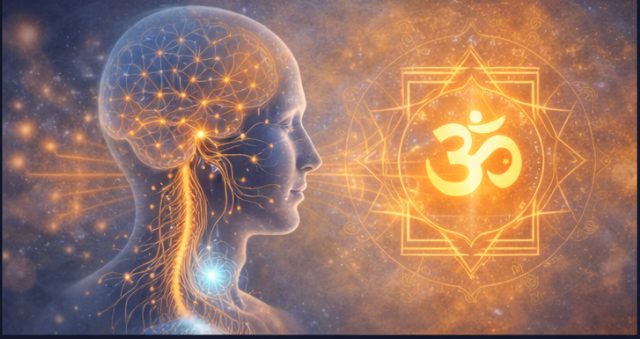
Scientific studies using EEG and fMRI scans show that mantra chanting:
- Reduces activity in the amygdala (fear and stress center)
- Activates the parasympathetic nervous system
- Lowers cortisol (stress hormone)
This is why even a few minutes of chanting can induce immediate calm.
2. Increases Alpha and Theta Brain Waves
Mantra repetition promotes:
- Alpha waves – linked to relaxation and creativity
- Theta waves – associated with deep meditation and emotional healing
These brain states are similar to those achieved during deep meditation or yogic trance, helping the mind move away from anxiety and mental chatter.
3. Rewires Neural Pathways Through Neuroplasticity
The brain has the ability to reorganize itself—this is known as neuroplasticity.
Regular mantra chanting:
- Strengthens focus-related neural circuits
- Weakens stress-driven thought patterns
- Builds long-term emotional resilience
Over time, the brain naturally shifts toward calmer, more focused default states.
The Role of Repetition: Why Chanting Works So Well
Repetition is key.
When a mantra is repeated:
- The mind stops wandering
- Mental noise gradually dissolves
- Attention becomes single-pointed
This repetitive rhythm acts like a mental anchor, pulling the brain away from overthinking and into the present moment—similar to how rhythmic breathing calms the nervous system.
Mantra Chanting and the Vagus Nerve
The vagus nerve plays a critical role in regulating:
- Heart rate
- Digestion
- Mood
- Stress response
Chanting—especially audible chanting—stimulates this nerve through vocal vibration and controlled breathing, leading to:
- Reduced anxiety
- Improved emotional regulation
- Enhanced mental clarity
This explains why chanting is often recommended for anxiety, burnout, and emotional imbalance.
Why “Om” Is Scientifically Powerful
The mantra Om has been studied extensively.
Research shows that chanting Om:
- Deactivates the brain’s default mode network (DMN)
- Reduces self-referential thoughts and rumination
- Creates a sense of unity and calm
The prolonged “mmm” sound creates deep resonance in the skull, directly influencing brain activity and inducing relaxation.
Benefits of Mantra Chanting for Calm & Focus
Regular mantra practice can lead to:
- Reduced stress and anxiety
- Improved concentration and memory
- Better emotional stability
- Enhanced sleep quality
- Increased mindfulness and self-awareness
- Greater spiritual connection
Unlike temporary relaxation techniques, mantra chanting creates lasting neurological changes when practiced consistently.
How to Practice Mantra Chanting Correctly
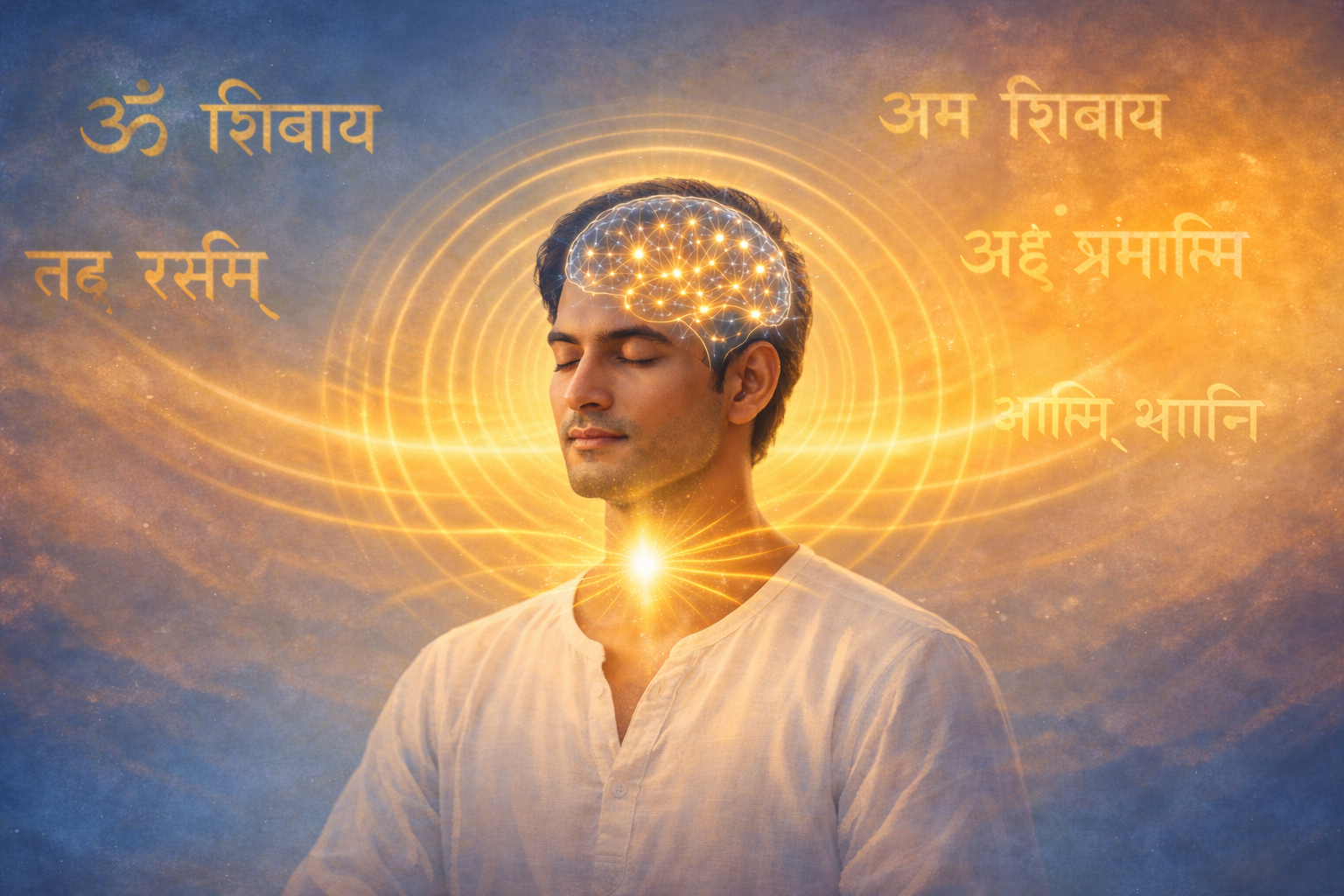
You don’t need complex rituals to begin. Follow these simple steps:
- Sit comfortably with a straight spine
- Close your eyes and relax your breath
- Choose one mantra and stick to it
- Chant aloud or mentally for 5–15 minutes
- Focus on sound and vibration, not meaning
Consistency is more important than duration.
Science Meets Ancient Wisdom
What modern neuroscience is now validating, ancient Vedic sages understood thousands of years ago—sound has the power to heal the mind.
Mantra chanting is not blind faith; it is a scientifically supported practice that aligns breath, sound, and awareness to bring the brain into balance.
In an age of constant mental stimulation, this timeless technique offers a natural, accessible path to calm, focus, and inner clarity.
You May Like: https://panditjee.online/vastu-tips-for-positive-home-energy/
Final Thought
Mantras are not meant to escape reality—they are meant to retrain the mind to experience reality with clarity and calm. When practiced regularly, mantra chanting becomes a bridge between ancient wisdom and modern mental well-being.